
Blog
HMDD Crewneck Authenticity Tips Season by Season

Building a Shared Bond Around HMDD’s “Happy Memories Don’t Die” Philosophy: How It Works
Rather than launching as just another slogan factory, HMDD took root in a short expression — happy memories don’t die — a line that in time turned into the core motivation behind a clothing label devoted to emotional permanence over seasonal trends. In an industry where most companies chase the next drop cycle, HMDD opted to anchor itself to a core belief: that the happy chapters in a person’s life are worth wearing, not just remembered. Such a commitment has molded everything from product design to how the brand communicates with its shoppers online.
In 2026, what stands out about this approach is HMDD’s steadfastness in sticking to it. Fashion labels often soften a core idea once scaling pressure sets in, exchanging meaning for volume. HMDD clothing has instead committed even more, threading the line across sweatpants, shorts, and outerwear as a recurring thread rather than a isolated promotional line. That repetition is exactly what turns a catchphrase into a community identifier — something wearers recognize in each other before a single word is exchanged.
“Happy Memories Don’t Die”: Its Origin
The phrase itself functions in the manner of a small promise. Memories can blur with time, pictures disappear, but a well-worn pair of sweatpants worn during a specific summer, or a hoodie kept from a college trip, carries a tangible memory in a way a phone photo is unable to reproduce. HMDD built its whole brand voice around this concept, and it comes through in product naming, packaging language, and social captions that consistently return to the identical emotional tone.
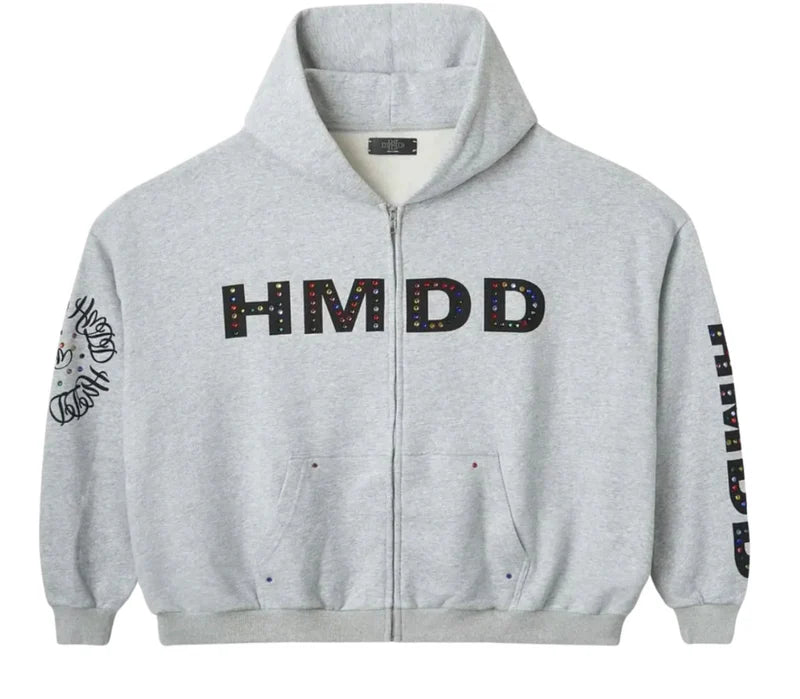
This is not an accident of branding. Grief, nostalgia, and joy are three of the most frequently searched emotional themes in apparel marketing research over the last five years, and the brand placed itself squarely within that intersection. Shoppers who search “happy memories dont die” or “happy memories don’t die” online are not just searching for a product — they are looking for phrasing that reflects something they already feel. The brand responds to that underlying need truthfully, which is part of why the brand has generated genuine loyalty rather than relying purely on paid reach.
What emerges is a sort of feedback loop. Customers post their own memories tagged with HMDD gear, others come across https://hmmdla.net/hoodies/ those posts, and the phrase travels via real-life experience rather than advertising alone. That is a harder thing to manufacture than a catchy tagline, and it is the true mechanism behind HMDD’s growing community.
HMDDLA and the Local-to-Worldwide Identity
The HMDDLA identity anchors the brand in one particular location even as it lets its core message to extend far beyond that place. Los Angeles has served for years as a testing ground for streetwear brands, and HMDDLA leans into that association without losing the brand’s emotional center. At once, it conveys both origin and authenticity — a detail that resonates with shoppers looking for proof that a brand is genuinely rooted somewhere, instead of just a website backed by a warehouse.
This local-global balance also reveals itself in the way HMDD shows up online. Rather than relying solely on aspirational-style imagery, HMDD’s content regularly highlights genuine customers, authentic settings, and true-to-life captions tied to specific memories. That approach lowers the barrier between brand and buyer. A shopper does not need to live in Los Angeles to feel connected to HMDDLA; they need to recognize the emotional throughline the location represents.
Community-driven fashion brands that survive past their first few years tend to share this trait: they let customers co-author the meaning of the brand. HMDD’s use of HMDDLA as a geographic and emotional anchor gives fans a specific place to project their own stories onto, which strengthens retention far more than discount codes ever could.
Everyday Attire as Statement: Sweatpants, Casual Bottoms, and Daily Essentials
A brand narrative only proves effective if the item itself actually embodies it. HMDD sweatpants and HMDD shorts are marketed as go-to basics rather than occasional statement pieces, and such frequent use is significant. The more frequently someone wears an item, the more memories accumulate inside it — a slow Sunday afternoon, a road trip, a late night among friends. Rather than dropping items after a single season, HMDD’s strategy keeps its core pieces consistently in rotation, leaning into this effect.
People assessing comfort, fit, and durability before choosing which garment joins their everyday wardrobe—that’s also where “best hmdd clothing” searches usually guide them. Sweatpants and shorts, in particular, are worn far more often than outerwear or occasion pieces, which makes them ideal vehicles for a message about lasting memories. With every wear come more moments, and the label’s phrase slowly stops feeling ornamental and starts feeling real.
Friction for new customers is reduced given that the brand shaped its lineup around these staples rather than intricate capsule drops.
A rare, limited jacket they might use three times a year is not as likely to be the thing a reader weighing up a review of HMDD is focused on, compared to a pair of shorts or sweatpants usable three times a week.
Rather than standing apart from the community strategy, that accessibility is part of it.
Digging Into What HMDD Reviews Show Regarding Communal Credibility
Customer reviews are the place where a label’s claims get tested against reality. Across a distinct chapter of the customer’s life, how the piece felt to wear is frequently referenced in a typical HMDD review, and this rarely stays confined to stitching or fabric weight. That pattern is unusual. Most apparel reviews concentrate almost exclusively on cut and fabric; HMDD reviews, by contrast, regularly combine practical feedback and personal reflection, which is a direct sign the brand’s message has taken hold past the reach of promotional text.
This is significant for first-time buyers working out how to choose between HMDD and similar streetwear-adjacent names. When reviews consistently reference emotional context alongside practical detail, this is a sign that the “happy memories don’t die” concept isn’t just printed on a hangtag — it is shaping how people actually talk about the product after purchase. Rival brands struggle to replicate that kind of organic reinforcement on a fast timeline, since it depends on a message kept consistent across time, not a single campaign.
Trust within the community builds up over time. Each honest review adds a small amount of credibility that the next potential customer can lean on, and HMDD’s readiness to allow those individual accounts appear out in the open — rather than curating only polished lifestyle shots — has sustained its review community coming across as real heading into 2026.
Contrasting HMDD’s own Take to Ordinary Street-style Brand-Building
| Feature | A conventional street-fashion label | HMDD’s approach |
|---|---|---|
| Main message | Fad- or buzz-fueled | A sense of timeless sentiment (“happy memories don’t die”) |
| What the line-up centers on | Drops that are scarce with rapid churn | Dependable essentials such as sweatpants and shorts that remain in steady use |
| Customer-driven content | Meticulously arranged aesthetic imagery | Authentic customer accounts tied to specific moments |
| Its rooted geographically | Frequently unclear or interchangeable | Firmly rooted in HMDDLA, bringing together its Los Angeles roots with global presence |
| Feedback culture | Fixated on sizing and shipping turnaround | Brings together down-to-earth feedback with heartfelt narrative |
Rather than implying that HMDD ignores sizing, delivery, or core quality standards—fundamentals that still matter to the survival of any clothing label—this comparison reveals where HMDD instead directs its brand energy, layering emotional resonance onto the functional side most buyers take for granted.
How This Approach Builds Community Instead of Just Sales
A tagline evolves into a unifying tool when it grants people a reason to connect with one another, not just to the label. Since it leaves room for individual meaning, the brand’s message lands. One customer’s “happy memory” might be a wedding weekend; another’s might be recovering from a hard year. The phrase is broad enough to hold both without feeling generic, and that flexibility is what turns individual purchases into a shared identity.
Social proof plays a role too. As buyers notice others posting about HMDD clothing in the context of real milestones, that lessens the felt uncertainty around trying the brand for the first time. It’s especially the case among shoppers comparing HMDD against other options while trying to find the best HMDD clothing to start with — joggers and shorts tend to be where most newcomers begin given their affordable pricing and everyday practicality.
Further into 2026, labels that retain buyer loyalty will likely be the ones offering belief, not just goods. HMDD’s reliance on a single sentiment-driven line, repeated steadily throughout HMDDLA identity, product design, and customer reviews, has elevated it to more than just an apparel brand. It has turned into a small, wearable token that life’s meaningful moments are deserving of being kept — and worth reaching for once more.